What are the essential supplies for geriatric rehabilitation? The answer depends on a person’s mobility, home environment, and recovery goals. Common essentials include walkers, canes, wheelchairs, transfer belts, shower chairs, grab bars, adjustable beds, and simple exercise equipment such as resistance bands. A therapist may also recommend dressing aids or non-slip footwear. Fit matters. A walker that is too tall, or a grab bar placed beyond easy reach, can make daily tasks harder rather than safer.
For buyers comparing products from China, the key is not the longest catalog. Check product specifications, material details, stability, cleaning instructions, and available sizing. Ask suppliers for test documentation and clear guidance on intended use. Confirm that samples match the product description, and involve a rehabilitation professional when selecting equipment for an individual. Small details count. A transfer belt’s grip, a wheelchair’s turning space, or a chair’s seat height can change how safely someone moves. A product list can look complete and still miss the person.
In Being Mortal, physician and surgeon Atul Gawande wrote, “Our ultimate goal, after all, is not a good death but a good life to the very end.” That principle offers a useful lens for choosing rehabilitation supplies: support independence, comfort, and participation, not just movement. The right equipment can help—but equipment alone is not a care plan. Selection should reflect professional assessment, the user’s preferences, and the realities of their home.
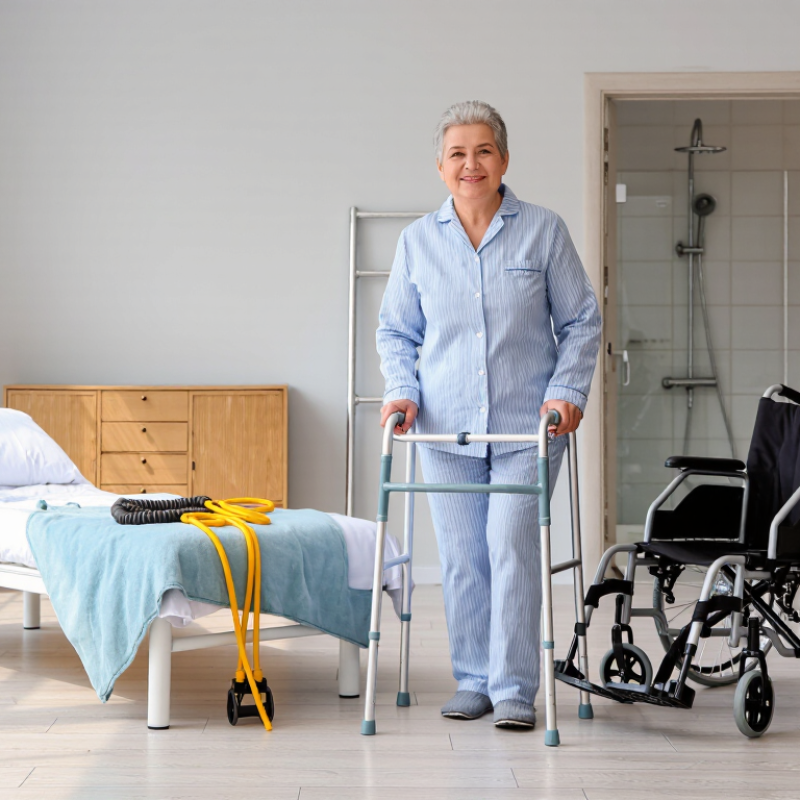
Core Categories of Geriatric Rehabilitation Supplies
Geriatric rehabilitation supplies cover mobility, transfer, exercise, positioning, and everyday self-care.
Mobility options include walkers, canes, and wheelchairs, selected according to a person’s balance, strength, and usual surroundings. A walker should feel stable on the floor and fit the user’s height; cramped hallways can make an otherwise suitable model awkward. Fit matters.
Transfer aids, such as gait belts and transfer boards, can support supervised movement between a bed and chair. A trained caregiver should assess their use, since the wrong technique may increase risk rather than reduce it.
Exercise supplies range from light resistance bands to pedal exercisers and hand-strength tools. Start with manageable resistance, and adjust activity with guidance from a rehabilitation professional.
Positioning products include supportive cushions, adjustable backrests, and bed wedges. They can improve comfort, but a cushion alone cannot prevent every pressure injury.
Daily-living aids, such as reachers, long-handled sponges, and dressing sticks, help make routine tasks less demanding. Keep it practical.
Measure doorways, check grip comfort, and consider cleaning and storage before choosing equipment. Even a careful category list can miss personal preferences: some users may find a device helpful at home but frustrating in a busy clinic.
A therapist or clinician can help match supplies to ability, environment, and rehabilitation goals.
Mobility and Transfer Equipment for Older Adults
For older adults, mobility equipment should match daily routines, strength, balance, and home layout. A properly fitted cane or walker can support short trips across a room, while a wheelchair may help conserve energy over longer distances. Check that handgrips feel secure and brakes work smoothly. Transfer aids, such as sliding boards or support belts, can assist movement between a bed, chair, and wheelchair. They do not replace training or supervision when someone needs hands-on help. A professional assessment can help identify suitable equipment and fit.
Tips: Measure doorways and turning spaces before choosing a wheelchair. Check the floor for loose rugs and clutter. Test brakes before each transfer. Follow the equipment instructions, and ask a trained care professional to demonstrate unfamiliar techniques.
Small details matter. A walker that is too tall can make shoulders tense; one that is too low may encourage a stooped posture. Transfer benches and shower chairs can reduce standing time in wet areas, but they need stable footing and a secure fit. Needs can change, sometimes faster than expected. Recheck comfort and function after illness, a fall, or a change in living arrangements.
Therapy and Daily-Living Aids in Rehabilitation
Therapy and daily-living aids help older adults practise movement and manage routine tasks with less assistance. Useful supplies include adjustable walkers, canes, transfer boards, shower chairs, raised toilet seats, reachers, and easy-grip utensils. For therapy, resistance bands and seated pedal exercisers support graded movement. Small details matter: rubber tips should grip the floor, handles should fit the user’s hands, and shower-chair feet should remain stable on wet surfaces. A low-cost aid is not a good fit if it is difficult to adjust or clean.
The World Health Organization’s 2023 rehabilitation fact sheet estimates that 2.4 billion people worldwide live with conditions that may benefit from rehabilitation. The CDC reports that more than one in four U.S. adults aged 65 and older falls each year. These figures underscore why fall-prevention features and supervised practice matter. They do not mean every older person needs the same equipment. A therapist or occupational therapist can assess transfers, balance, reach, and home layout before items are selected.
When sourcing rehabilitation supplies from China, request clear specifications for load capacity, dimensions, materials, cleaning instructions, and adjustment ranges. Ask suppliers for inspection records and sample units; check fasteners, welds, moving parts, and packaging before larger orders. Fit can be imperfect. A walker that suits one person may obstruct another person’s narrow hallway, so trial use and feedback should shape final selection.
How to Select Supplies for Individual Care Needs
Choosing geriatric rehabilitation supplies starts with the person, not a standard kit. A physiotherapist or occupational therapist can assess balance, grip strength, mobility, pain, and daily routines. A walker that fits one person may feel unstable to another. Check handle height while the user stands naturally, and consider whether brakes are easy to squeeze. Small details matter. A shower chair should fit the bathroom, allow safe transfers, and remain steady on the actual floor.
For supplies sourced from China, compare material specifications, dimensions, weight limits, cleaning instructions, and inspection records. Ask how products are tested and whether replacement parts are available. These details help caregivers judge suitability, but they do not replace an in-person fit check. A device can look sturdy online and still be awkward at home. Even a carefully chosen aid may feel strange on day one; discomfort, skin marks, or repeated near-falls call for reassessment with a qualified clinician.
Tips: Measure doorways and bathroom space before ordering. Let the older adult try the item with supervision, then observe a real task, such as standing from a chair. Record what feels difficult. Recheck fit as strength, balance, or care needs change.
Quality Standards and Sourcing Supplies from China
Geriatric rehabilitation supplies from China may include walkers, transfer belts, shower chairs, therapy bands, and pressure-relief cushions. Quality starts with clear specifications. State dimensions, materials, weight capacity, adjustment range, and intended use. Check seams, wheel locks, grip texture, and frame stability. Small details matter.
When sourcing, assess the supplier’s quality controls and product-specific documentation. Check whether standards such as ISO 13485 apply, then verify certificate scope and validity with the issuing body. Request material declarations, test reports, batch traceability, and clear user instructions. Confirm that labels and documentation meet requirements in the destination market. Approve a sample before placing a larger order; it can reveal issues that photos miss. Inspection schedules and acceptance criteria should be written into the purchase agreement. Not every supplier will communicate limitations clearly, so ask direct questions and record the answers.
Tips: Compare samples under realistic conditions, such as checking walker brakes on a firm floor. Use an independent inspection when risk or order size warrants it. Keep spare parts and replacement timelines in your sourcing plan.
Conclusion
What are the essential supplies for geriatric rehabilitation? They include equipment that supports safe movement, transfers, therapeutic exercise, and everyday independence. Mobility aids, transfer boards, adjustable seating, and supportive walking equipment can help older adults move with greater confidence. Exercise tools, positioning supports, and daily-living aids—such as adapted utensils and dressing aids—can also make therapy and routine activities more manageable.
Choosing suitable supplies starts with each person’s mobility, strength, balance, living environment, and rehabilitation goals. Caregivers and clinicians should consider ease of use, comfort, adjustability, and compatibility with the user’s needs. When sourcing supplies from China, buyers should review product specifications, materials, manufacturing consistency, and relevant quality documentation, while also checking that products are easy to maintain and use. Careful selection helps create a practical, safe rehabilitation setup that can adapt as an older adult’s needs change.
 Evolve Medical
