Evolve Medical
In hospitals, an infusion pump may deliver fluids drop by drop, hour after hour. A small flow error can gradually change a patient’s medication exposure. That is why the question “Why is flow rate accuracy critical in infusion therapy” deserves practical attention, not a simple technical answer. Nurses depend on the programmed rate, while pharmacists and biomedical engineers depend on verified performance. If a pump is set to 5 mL per hour, the delivered volume should remain close to that target under realistic conditions. Small errors matter.
Top China infusion pumps are often evaluated through flow stability, alarm response, calibration records, and usability. However, a product’s origin alone does not prove its clinical reliability. Hospitals should examine test data, quality management evidence, maintenance procedures, and compatibility with syringes or infusion sets. Fluid viscosity, tubing resistance, temperature, and low-flow conditions can all influence delivery accuracy. These details are easy to overlook. They should not be.
A dependable evaluation also considers standards such as IEC 60601-2-24, risk controls, and documented verification methods. Operators need clear instructions and regular training. Engineers need traceable calibration and service support. In daily practice, even a well-designed pump can perform poorly when accessories are mismatched or preventive maintenance is missed. No pump is perfect. The responsible approach is to compare measurable performance with clinical needs, review limitations openly, and confirm results through routine monitoring. This introduction explores the factors that make flow rate accuracy essential when selecting and using infusion pumps in modern healthcare settings.
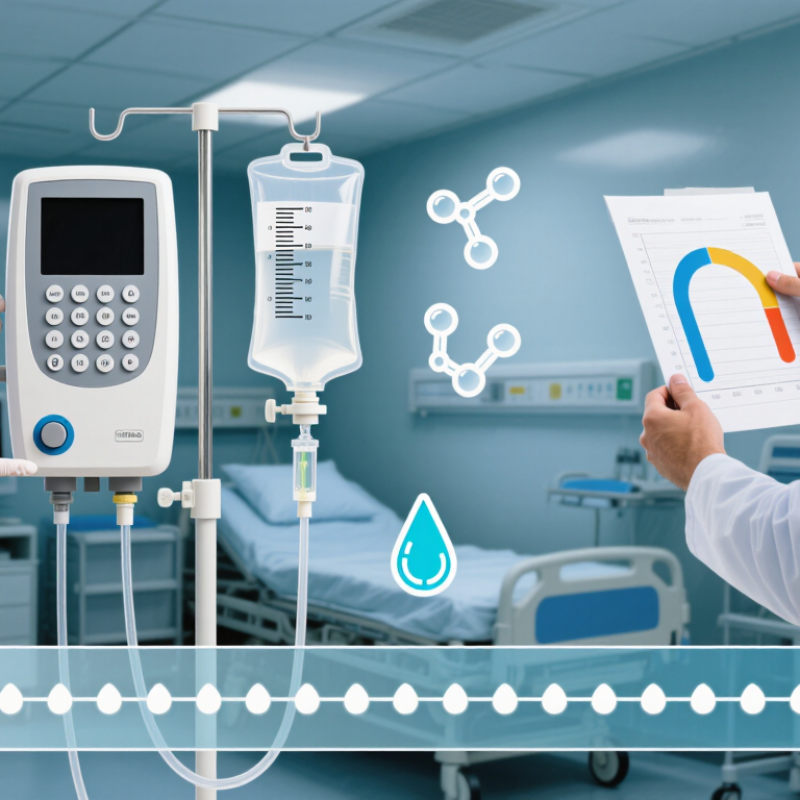
Infusion pumps deliver medication at a programmed rate, often measured in milliliters per hour. That number directly controls how quickly a patient receives fluids or prescribed medicine. Even a small flow error can change the intended dose over several hours. Too much fluid may increase clinical risk. Too little may delay treatment. Accurate delivery supports safer decisions, especially when medication has a narrow therapeutic range. In practice, flow rate depends on more than software. Tubing condition, fluid viscosity, pressure, and battery performance can also influence delivery.
Tips: Confirm the prescribed rate before starting. Inspect the tubing for bends, air, or loose connections. Keep the pump level and follow the facility’s testing procedure. Record alarms and unusual changes. Regular calibration matters. A quick visual check is helpful, but it cannot replace professional maintenance.
Reliable operation also requires trained users. They should understand occlusion alarms, upstream pressure, and the difference between programmed and actual delivery. A pump can display the correct setting while a blocked line slows infusion. That is an easy detail to miss. Measurement systems are not perfect, either. Clinical teams should review performance data, question unexpected results, and report repeated deviations. Better accuracy comes from careful equipment design, routine verification, and honest reflection after each use.
The IEC 60601-2-24 standard targets flow accuracy within ±5% under defined test conditions. This limit matters because a programmed rate is not always the delivered rate. Tubing resistance, back pressure, temperature, and fluid viscosity can change performance. For a 10 mL/hour setting, a 5% error equals 0.5 mL/hour. That difference may be significant for neonates or patients receiving concentrated medicines. The U.S. FDA reported about 56,000 infusion-pump adverse-event reports and 710 deaths from 2005 to 2009. The data shows why accuracy deserves practical attention.
Tips: Verify the pump with calibrated test equipment. Test low, medium, and high rates. Repeat checks after battery replacement, servicing, or software updates. Inspect occlusion alarms and the disposable set, too. A perfect laboratory result may not survive a busy ward.
Manufacturers and hospitals should read the ±5% target carefully. It is not a universal promise for every fluid, rate, or clinical setup. IEC testing uses specified conditions, while real patients bring movement, height differences, air bubbles, and changing pressure. That gap needs honest review.
Flow accuracy should be documented during incoming inspection and routine maintenance. Operators should also compare displayed volume with the expected volume over time. Small errors can accumulate quietly, and that is where confidence may become unsafe.
A 10% infusion-rate error can quietly change a patient’s drug exposure. At 5 mg per hour, a pump delivering 5.5 mg per hour adds 6 mg over 12 hours. That difference may matter greatly for sedatives, vasopressors, insulin, or other narrow-therapeutic-index medicines. The patient may appear stable while exposure is already drifting.
The U.S. Food and Drug Administration reported more than 56,000 infusion-pump adverse-event reports, including 710 deaths, between 2005 and 2009. It also recorded 87 pump recalls during that period. These figures show why rate accuracy is a clinical control, not merely a technical specification. In practice, nurses still face air bubbles, occlusion alarms, worn tubing, incorrect programming, and calibration changes. Small problems accumulate.
A reliable pump should maintain accuracy across low and high flow rates, not only during laboratory testing. Independent verification, routine calibration, drug-library safeguards, and bedside double checks remain important. Yet accuracy claims deserve scrutiny. A stated ±5% tolerance does not guarantee identical patient exposure, because tubing resistance and fluid viscosity also influence delivery. The overlooked detail is human use. A clear display can prevent more harm than a complex feature nobody checks.
Flow rate accuracy matters because a small delivery error can change treatment timing, dose exposure, and patient monitoring. In practical pump testing, pressure is often the hidden variable. As resistance increases, the pump may work harder before reaching its programmed rate. A narrow catheter, elevated container, or partially closed clamp can create this resistance. The display may still show a normal value. That is concerning.
Occlusion detection also affects accuracy. A pump should recognize blocked tubing quickly, but alarm thresholds can vary with flow rate and pressure. Viscous fluids create additional resistance, especially at low temperatures. Thick solutions may move more slowly than expected, even when the setting appears correct. Temperature matters too. A cold room can change fluid behavior.
Setup is equally important. Use compatible tubing, remove air carefully, and confirm every connection. Keep the tubing free from sharp bends. Position the fluid source as instructed. Before use, trained staff should check calibration records and perform a controlled flow test when required. I have seen setup mistakes blamed on the pump. That assumption is not always fair.
Tips: Check pressure trends, not only alarms. Test with the intended fluid. Recheck after changing tubing, height, or catheter size. Record unusual results, even when the error seems minor. Perfect accuracy is difficult. Careful habits reduce avoidable variation.
China Top Infusion Pumps: Why Is Flow Rate Accuracy Critical?
Evaluating China’s top infusion pumps requires more than reading a product brochure. Flow accuracy must be tested under fixed conditions. IEC 60601-2-24 provides the main testing framework for infusion devices. It examines flow performance, alarm behavior, and protection against unsafe delivery. In many technical specifications, stated accuracy ranges from ±2% to ±5%. That range can still matter greatly. At 5 mL per hour, a 5% error changes delivery by 0.25 mL each hour. Small numbers become important during long infusions.
Independent testing should record startup delay, trumpet-curve variation, occlusion recovery, and performance at different flow rates. A pump may perform well at 100 mL per hour, yet drift at 1 mL per hour. Temperature, syringe friction, tubing type, and back pressure can also change results. FDA reports documented more than 56,000 infusion-pump adverse event reports between 2005 and 2009, alongside 87 recalls. That historical figure shows why accuracy claims need evidence, not confidence. Published reports are useful, but test conditions are often incomplete. That deserves scrutiny.
Tips: Request raw measurement data, not only a pass statement. Check whether results cover low-flow conditions. Repeat tests with the intended syringe and tubing. Compare mean error, maximum error, and alarm response time. A practical test uses a calibrated balance, stable temperature, and several repeated runs. Perfect laboratory results may not survive a busy ward. Real use is less tidy.
Reference accuracy envelope for volumetric infusion pumps: ±5% of the programmed flow rate under specified test conditions
The chart shows programmed flow rates and the corresponding lower and upper boundaries calculated at ±5%. At low flow rates, even a small absolute deviation can materially affect delivered volume, which may influence fluid balance and dose delivery. Actual pump performance should be confirmed through standardized laboratory testing.
It means delivered flow may differ by up to 5% under defined test conditions. At 10 mL/hour, that equals 0.5 mL/hour. Real conditions may produce different results.
A small error can change treatment timing, dose exposure, and patient monitoring. This matters especially for neonates or concentrated medicines. Small differences accumulate quietly.
Tubing resistance, back pressure, temperature, viscosity, and setup can affect delivery. Narrow catheters and raised fluid sources may increase resistance. A bent tube can also interfere.
Not always. The screen may show the programmed rate while resistance reduces actual delivery. Compare delivered volume with expected volume over time.
Use calibrated test equipment and test low, medium, and high rates. Test with the intended fluid when possible. Record every unusual result.
Repeat checks after battery replacement, servicing, or software updates. Recheck after changing tubing, fluid height, or catheter size. Routine maintenance still matters.
Cold conditions can make some fluids more viscous. Thick solutions may move slowly, especially at low rates. The room may be part of the problem.
Confirm compatible tubing and secure connections. Remove air carefully and avoid sharp bends. Check clamps, catheter size, fluid height, and calibration records.
Blocked tubing can increase pressure and reduce delivery. Alarm thresholds may vary with flow rate and pressure. Check pressure trends, not alarms alone.
No. Laboratory tests use controlled conditions, while wards involve movement, height changes, and changing pressure. A perfect test result may not survive daily use.
Infusion pumps regulate the delivery of fluids and medications, making flow rate accuracy central to safe and consistent therapy. Why is flow rate accuracy critical in infusion therapy? Even a small deviation can change the amount of medication a patient receives, especially during long infusions or when using drugs with narrow therapeutic ranges. A 10% error may increase exposure and side-effect risks or reduce treatment effectiveness. For this reason, the IEC 60601-2-24 benchmark of approximately ±5% provides an important reference for evaluating pump performance.
Actual accuracy can be influenced by pressure changes, occlusion events, liquid viscosity, tubing characteristics, and incorrect setup. Reliable evaluation should therefore combine controlled laboratory testing with practical operating conditions, including different flow rates and fluid types. By comparing measured output with programmed settings, healthcare providers can better assess the consistency and safety of leading infusion pump designs manufactured in China. Regular verification, proper preparation, and careful monitoring remain essential for dependable medication delivery.
